
If you’ve found an old coin in a jar, inherited a box of check coin value from a relative, or picked up a handful at a flea market, the question that pops into your head is simple: is this worth anything? The answer depends on several straightforward factors—date, mint, condition, rarity, metal content and market demand—and a little careful detective work can get you a reliable estimate without sending every coin off to a lab. This article walks through the process step by step, explains the tools and resources you’ll want, and gives practical tips to avoid common mistakes that destroy value. Read on and by the end you’ll be able to separate the ordinary from the truly collectible.
Step 1: Start with a calm, careful inspection
Pick one coin and treat it gently. Lay it on a soft, clean surface and don’t rub or scrub. Your first goal is simple identification: country, denomination, date and any mintmark. Use a handheld loupe (10x is standard) or a phone camera with zoom to read small letters and mintmarks—those tiny letters can change a coin from modest to valuable. As you inspect, note:
- Obvious damage: deep scratches, holes, corrosion, or signs of cleaning.
- Distinctive features: doubled dies, repunched mintmarks, or any odd die chips.
- Metal color and surface: is it gold-toned, silver, copper, or a base metal?
Do not clean the coin. Cleaning is the fastest way to ruin collector value. Even well-meaning polishing leaves microscopic scratches and removes natural patina that buyers value.
Step 2: Identify the coin
Once you have the date, denomination and mintmark, match the coin to reference listings. For U.S. coins the Red Book (A Guide Book of United States Coins) is a classic starting point; for world coins, Krause’s catalogs are widely used. Don’t limit yourself to books—online databases are fast and frequently updated. Good online resources include:
- PCGS and NGC price guides
- Numista for modern and world coins
- Auction sites (Heritage, Stack’s Bowers) for realized prices
- Completed sales on eBay to see what similar coins actually sell for
Make sure you’re comparing coins in similar condition. A 1937 coin in “about uncirculated” condition will fetch much more than the same date worn to a smooth finish.
Step 3: Assess the condition (grading)
Condition—often called grade—is one of the biggest value drivers. Grading ranges from completely worn to flawless mint state, and while professional grading services (PCGS, NGC, ANACS) provide certified grades, you can do a reasonable self-assessment. Below is a simplified table to help you translate what you see into grading language.
| Grade Term | Common Abbreviation | What to Look For |
|---|---|---|
| Poor – Fair | P-1 to FR-2 | Design barely visible, heavy wear, rims often merged into fields |
| Good | G-3 to G-6 | Major details worn but outlines clear; date and major design elements readable |
| Fine | F-12 to F-15 | Moderate wear; most major details still visible |
| Very Fine | VF-20 to VF-35 | Light to moderate wear on high points; overall design sharp |
| Extremely Fine | EF/XF-40 to EF-45 | Minor wear on the highest points, great overall detail |
| About Uncirculated | AU-50 to AU-58 | Very slight traces of friction on the highest points |
| Mint State | MS-60 to MS-70 | No wear; MS-70 is perfect under 5x loupe |
If a coin looks like it might be valuable, consider submitting it to a third-party grading service. Certification removes buyer uncertainty and often increases sale price, but it also costs money and takes time.
Step 4: Verify metal content and weight
Some coins are valuable primarily for their metal (gold, silver, platinum). Others are worth more as collectibles. To determine which you’re dealing with:
- Check published specifications: weight, diameter and metal composition for that year and mint.
- Use a precise scale and calipers to measure your coin. Deviations can signal a counterfeit.
- Do a non-destructive magnet test: true gold and silver are not magnetic. If the coin sticks, it’s likely a base-metal fake.
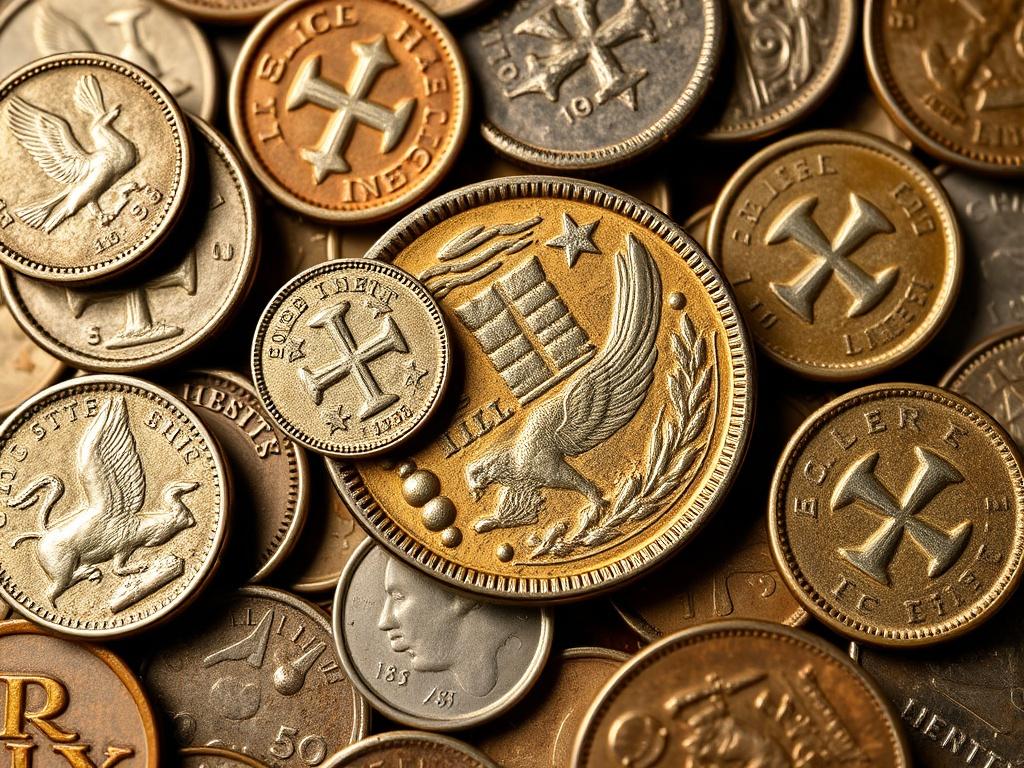
Avoid destructive chemical tests. If you need definitive metal analysis, seek a professional who uses XRF or similar non-destructive instruments.
Step 5: Look for rarities and errors
Some of the most valuable coins are not simply old or made of precious metal—they have rarity, unique errors, or interesting provenance. Common value-boosters:
- Low mintage or a subgroup of coins produced in small numbers
- Mint errors: double dies, off-center strikes, clipped planchets
- Varieties: repunched mintmarks, overdates, or design changes within a year
- Historical provenance or famous ownership
Use specialized references and forums to identify and verify varieties. Many errors are easy to spot with a loupe; some require experience and comparison to confirmed examples.
Step 6: Research market values and realized prices
Price guides give you a ballpark, but actual market value is what buyers will pay. To get realistic figures:
- Check recent auction results for coins of the same date, mintmark and grade.
- Look at completed listings on marketplace sites for realized prices, not just asking prices.
- Consult dealer price lists and price guides to see the spread between retail and wholesale.
Remember that retail dealers price higher to cover overhead, while private sales or estate auctions may bring lower prices unless there’s competitive bidding.
Step 7: Decide whether to get the coin certified
Certification certifies authenticity and assigns a grade, which can increase liquidity and price. Consider certification if:
- The coin appears to be high-grade, rare or otherwise valuable.
- You plan to sell in auction or want long-term investment security.
Downsides: grading fees, shipping risk, and the possibility that the grade assigned is lower than you expected. For common coins of modest value, certification often isn’t worth the cost.
Step 8: Choose a selling channel
How you sell affects the price you’ll realize. Common options:
- Local coin dealer: instant sale, lower price than auction, convenient.
- Auction house (specialist numismatic auction): often best for rare and high-value coins; fees apply.
- Online marketplaces (eBay, specialized forums): wide audience but handle with care—use clear photos and detailed descriptions.
- Coin shows and local clubs: good for connecting with knowledgeable buyers and getting multiple offers.
Prepare high-quality photos and documentation of research if you list online or take coins to auction.
Practical tools checklist
Here’s a quick packing list for anyone planning to assess coins at home:
- 10x loupe or magnifier
- Digital scale (0.01 g accuracy if possible)
- Calipers for diameter and thickness
- Soft gloves and a soft pad or cloth
- Reference books or a laptop/tablet with internet access
- Non-magnetic tray or surface
Common red flags to watch for
When buying or valuing coins, watch out for:
- Coins that show signs of cleaning (unnatural shine, hairline scratches)
- Extremely low asking prices paired with pressure to sell quickly
- Inconsistent weight or dimensions versus published specs
- Dealers unwilling to provide provenance or references
If a deal looks too good, it often is—examine carefully and get a second opinion.
When to call in an expert
Bring in a professional when:
- You suspect the coin is rare, extremely valuable, or a major error
- Authentication is critical (possible counterfeit of a high-value coin)
- You plan to sell in an auction and want the best presentation and provenance
Many reputable coin dealers and auction houses offer appraisal services. Choose established firms with clear reputations; independent numismatic organizations can provide referrals.
Preservation and storage tips
After inspection, store valuable coins properly:
- Use inert holders (Mylar flips, coin capsules) to avoid PVC damage.
- Keep coins in a stable, low-humidity environment—silica gel in a safe helps.
- Handle coins by the edges and avoid fingerprints.
- Document provenance and maintain a record of all appraisals and sales.
Good storage protects both condition and future resale value.
Quick reference: What affects a coin’s value most?
| Factor | Why it matters |
|---|---|
| Date & Mintmark | Tells you rarity and historical context; some mintmarks are scarce |
| Condition (Grade) | Little wear can vastly increase value; pristine coins are rare |
| Metal Content | Precious metals have intrinsic value that fluctuates with markets |
| Rarity & Mintage | Low production numbers or surviving population raise demand |
| Varieties/Errors | Uniqueness attracts specialists and collectors willing to pay premiums |
| Market Demand | Collector trends and economic conditions drive real-world prices |
Beware of myths
Many online claims inflate the value of certain common coins. “Old” does not automatically mean “valuable.” Also, avoid DIY chemical tests and aggressive cleaning methods—those destroy value. When in doubt, pause and research before you act.
Conclusion
Checking the value of old coins is a blend of patient observation, careful measurement and smart research: identify the coin precisely, assess condition without cleaning or damaging it, verify metal and specifications, search reliable price guides and comparable sales, and involve professionals when the stakes are high. Use simple tools—a loupe, scale and references—protect your finds, and remember that market realities (what collectors are willing to pay now) matter more than theoretical prices. With a little time and the right resources, you can turn curiosity into knowledge—and sometimes a pleasant surprise in your pocket.